The breed
Chirikof Island Cattle: The Wild Herds of the Aleutians
By The Okmok team ·
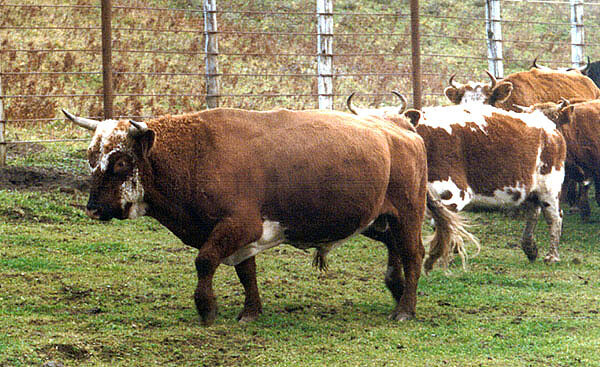
Chirikof Island cattle are a rare Alaskan breed brought to the islands in the days of Russian America and then left largely alone for a century of Aleutian winters. A 2007 USDA study found them closest to rare Siberian Yakut cattle. On Umnak Island, Okmok’s herd combines Chirikof cattle with Hereford, and at times Charolais, in a herd closed for nearly 50 years.
Where the cattle came from
Cattle reached the Alaskan islands in the era of Russian America, long before Alaska became part of the United States. What happened next is what makes them unusual: for roughly a century, they were left mostly to themselves. No barns, no feedlots, no steady supply of outside animals. Just grass, sea weather and long Aleutian winters.
Over that time, the conditions did the selecting. Animals that handled the cold, wind and rain survived and bred. The result is cattle shaped by the islands rather than by a breeding program.
This is also why the breed is rare. Cattle that live on remote islands, cut off from the mainland, do not mix much with the commercial breeds found on most farms. The Chirikof line kept its own character because almost nothing reached it from outside.
The Yakut connection
For a long time the exact ancestry of these cattle was uncertain. A 2007 USDA study found Chirikof cattle closest to rare Siberian Yakut cattle. That fits the history: animals brought east during the Russian period, then isolated on islands where few others joined them.
It is a small but striking detail. Cattle grazing in the Aleutians today carry a genetic link to a rare breed from Siberia.
The Okmok herd on Umnak Island
Okmok’s cattle live on Umnak Island, in the Aleutian chain between the Pacific Ocean and the Bering Sea. Our herd is Chirikof cattle crossed with Hereford, and at times Charolais. Today there are about 13,000 head on the island, mostly feral, with Hereford and Charolais genetics hardened back by the island.
- Chirikof cattle crossed with Hereford, and at times Charolais.
- A closed herd for nearly 50 years.
- Cold-tolerant, on grass year-round.
- Isolated from mainland disease.
A closed herd means no outside animals have been brought in. Kept apart from mainland herds for nearly 50 years, the cattle have stayed isolated from mainland disease. A century of selection built cold-hardy genetics, and we manage the herd to keep them.
In practice, that shapes how we run the ranch. The island sets the terms: grazing is matched to how fast the land recovers, and herds are kept off nesting grounds and streams. Rather than barbed wire, smart halters draw invisible fences, so the cattle can move across open grass while sensitive ground is protected. Our approach is to record progress and keep status labels truthful rather than make claims we cannot back up.
The island they live on
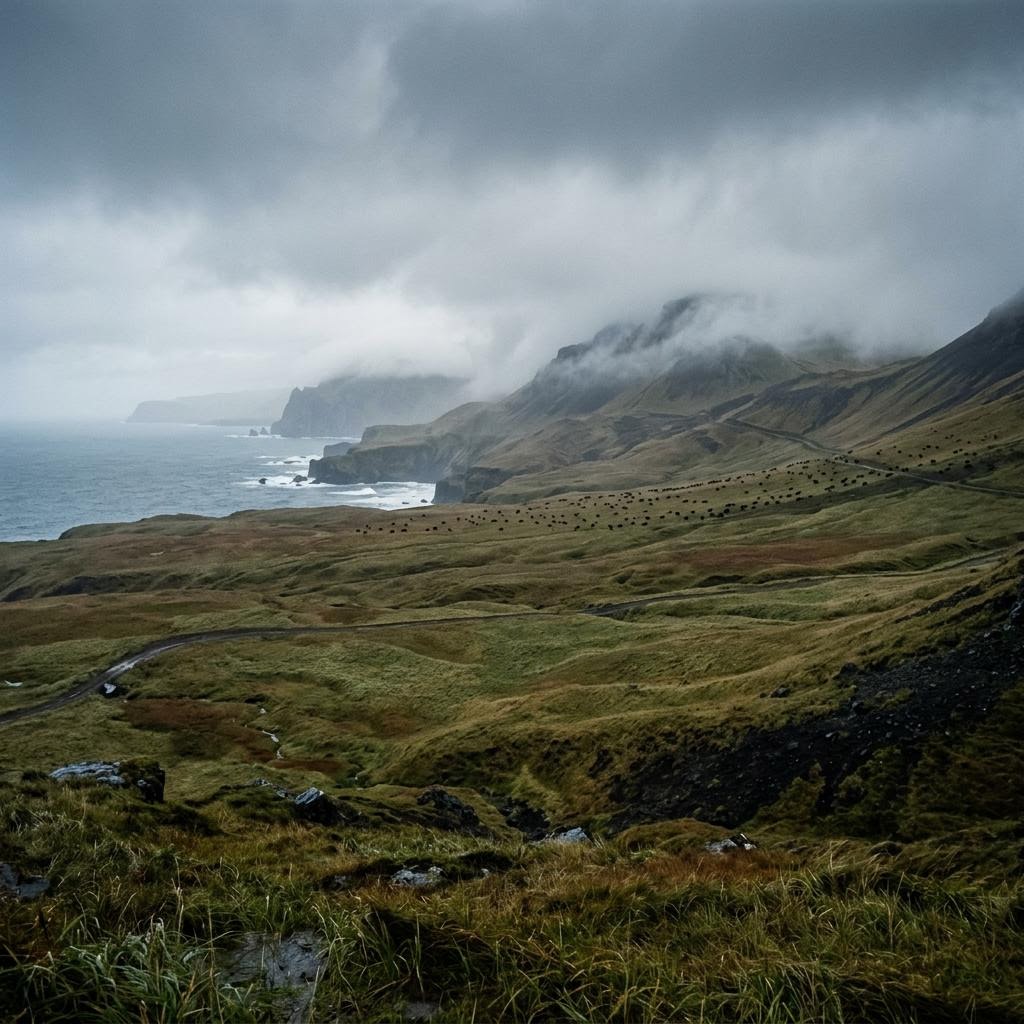
Umnak is where warm Pacific air meets cold Bering Sea air, which brings wild weather and a rare island microclimate. Rain falls all year, but the ocean keeps the island from the deep freeze of mainland Alaska. There are no trees: from the coast to the caldera it is unbroken grass, fireweed and lupine on deep volcanic soil.
The cattle range across more than 500,000 acres of leased Native Corporation land. They graze year-round, with no grain, no antibiotics and no added hormones, and the herd is certified by the American Grassfed Association and USDA-certified organic.
Okmok Caldera and Fort Glenn
Okmok is named for the caldera on Umnak Island. On its eastern flank sits Fort Glenn, a World War II base. Today it houses our USDA-certified processing facility, miles from where every animal grazed. That means short transport and one operation from pasture to pack.
Every animal is processed there, then cut, vacuum-sealed and frozen before it leaves the island. Processing close to the grass means minimal transport and minimal stress, and it keeps quality control in one place, from pasture to pack.
The film
The Island Herd
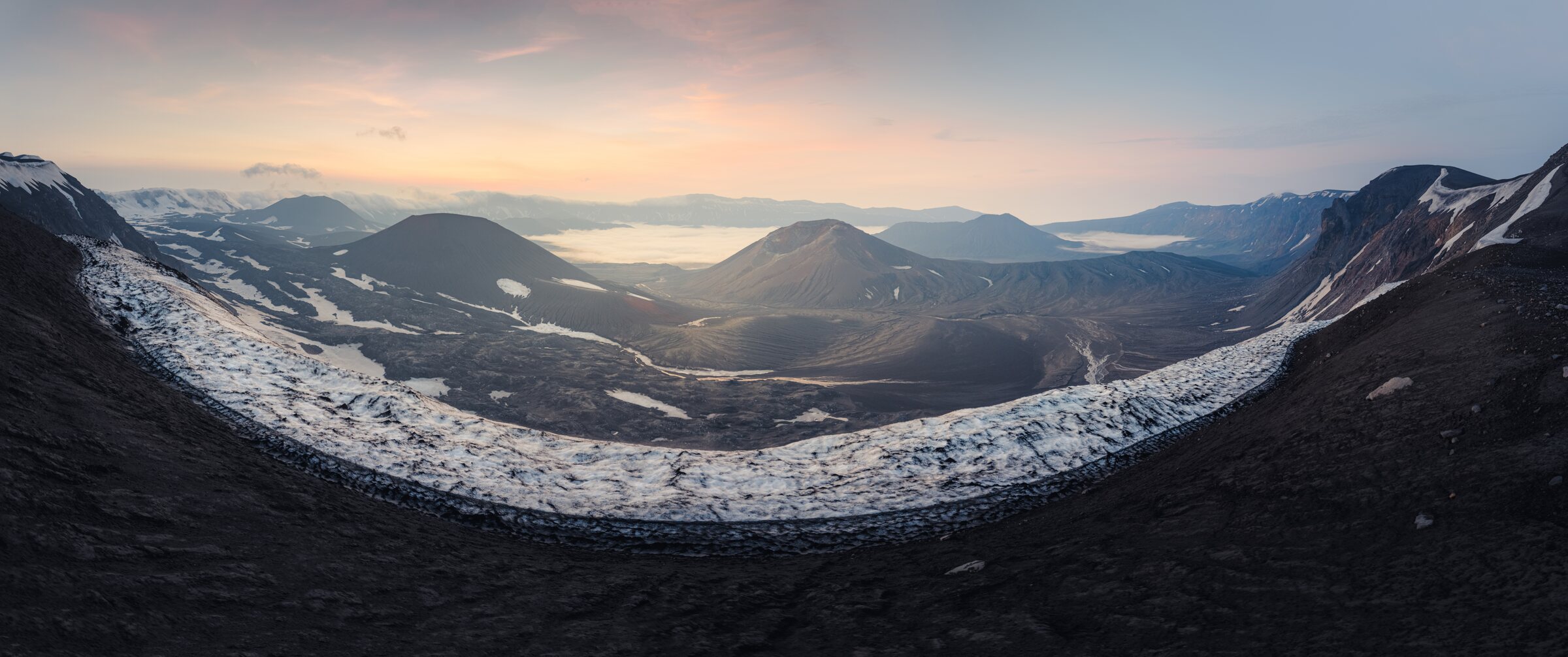
Hereford and Chirikof Island cattle living wild on Umnak Island, a closed herd for nearly 50 years. Filmed on the island, with an original score.
What happens next
The first roundup begins in spring 2027, followed by rotational grazing. Our ranchers are fifth-generation, and they use GPS halters that draw invisible fences, so the herd moves across open grass without barbed wire. The first release of beef ships frozen in summer 2027.
To learn more about the island, the breed and our stewardship work, visit Our Ranch. If you are thinking about buying, start with Quarter Cow vs. Half Cow.